
FMJ’s Aviation Team has put together a three-part series on how to avoid some of the less understood state and federal tax pitfalls that come with buying, operating, and financing business aircraft and commercial aviation assets.
Part 3: THE AGONY AND ECSTASY (OF AIRCRAFT):
How Your Aircraft Leasing Might Cost You in Unexpected Ways
Ronnie and Dolly discovered the joys of private aircraft ownership a few years ago when they bought their much beloved Pilatus PC-12. They planned to use it in their company to fly to their Midwest factory locations and sometimes to defer costs by sharing usage with their friends. Last year, they also discovered some of the less joyful parts of aircraft ownership when the Minnesota Department of Revenue (MDOR) noticed they had an aircraft and ran them through a sales and use tax audit. Pain ensued.
On the wise advice of an NBAA article, they had purchased the Pilatus in a special purpose company, RD, Inc. (RDI) and used that company to lease the aircraft to themselves and their friends. RDI charges each lessee $2,000 an hour for the lease of the equipment, and these charges include expenses paid by RDI for the cost of fuel and maintenance, and an hourly fee to Pratt & Whitney for its engine service plan. Being in Minnesota, they collect and remit sales tax on the rental payments, but they also decided to reduce the taxable rent by $600 per hour, netting out the costs of the fuel, maintenance, and plan payments. Unfortunately, MDOR disagreed with their approach and assessed $150,000 in back sales taxes for the prior three-year period.
After they picked themselves up off the floor, Ronnie and Dolly asked their accountant, can this possibly be right?
Passing Through Expenses Without Charging Sales Taxes is Complicated
In Minnesota, certain items and services are subject to sales tax, while others are not. You may notice this when you shop at Target and perhaps you pick up a package of socks, some ground beef, a board game, and a new phone case. When you look at your receipt, you will see that Minnesota sales tax is not applied to the socks or ground beef but is on the board game and new phone case. This is because Minnesota exempts clothing and unprepared food from its sales tax. On that receipt you will usually see a code next to each line item indicating whether it is subject to sales tax. Because the taxable versus nontaxable items were separately stated, Target (or any other retailer for that matter) does not need to charge you sales tax on the non-taxable items. However, if that receipt just listed the total amount owed and at least one of the items was taxable, then the total amount would be subject to sales tax.
Based on the Target example above, you might ask whether Ronnie and Dolly would have avoided the additional $150,000 if they had listed the expense reimbursements separately from the rent or at least itemized the lease components in the invoices. However, the analysis in Minnesota is not so simple. MDOR has issued two Revenue Notices that provide the Department’s position as to when a taxpayer can separately state taxable and nontaxable items on an invoice and only collect sales tax on the taxable items.
According to Minnesota Revenue Notices 00-04 and 03-12, a retailer (which might include an aircraft lessor like RDI), can separately state taxable and nontaxable items on a lessee’s invoice and not collect sales tax on the nontaxable items only when:
- The lessor transfers title or possession of the nontaxable item to the lessee;
- The invoice must reflect a reasonable charge for providing the nontaxable item to the lessee;
- The lessee must have the option of not purchasing the nontaxable item from lessor;
- The sale of the nontaxable item cannot be integral to the sale of the taxable item;
- The sales price for the nontaxable good must be ascertainable at the time of the sale of the taxable item; and
- The invoice to the lessee must separately state the taxable and nontaxable items and apply sales tax to the taxable items.
Not all of these items naturally apply to Ronnie’s and Dolly’s aircraft. Applying the above analysis to each of the fuel, maintenance costs, and hourly engine program fee RDI charges back to its lessees, it looks like both RDI and the MDOR may have made some mistakes.
Take the fuel chargeback, for example. If you list the fuel separately and have the receipts, this should satisfy all the above requirements assuming RDI only charged the lessees its cost for the fuel (no mark-up). Therefore, it would not be subject to Minnesota sales tax.
Looking at the other items, it seems likely that the maintenance costs might not satisfy the tests because the maintenance costs are not being stated separately on the invoice, and the cost may not be ascertainable at the time they are invoiced (i.e., the maintenance is due in the future). Also, possession of the parts used to maintain the aircraft will likely not transfer to the lessees. The Pratt & Whitney fees may not satisfy the tests for some of the same reasons.
Could a lessor draft around some of these rules in a lease? In other words, maybe the aircraft lease agreement requires the lessee to pay for these items directly, or maybe they are always billed back to the lessee only after completed. Could the lessor follow the terms of such a lease agreement in practice to cause one or more of these items to be nontaxable as long as separately stated? Perhaps. This would take careful drafting and analysis of each specific aircraft arrangement.
This is Not Just a Minnesota Issue
If you applied the Minnesota test in other states, the results will possibly be very different. For example, if the lessor is in Texas (the H-E-B test?) or Arkansas (the Walmart test?), you need to look at these issues in light of their particular statutes. Where the engine plan fee costs might not be excludable in Minnesota, Texas would be inclined to allow the exclusion if separately stated and backed up with invoices. New York, as another example, has a rule similar to Minnesota’s but with less stringent requirements. So, what may not be available in Minnesota, may be available in New York.
The issues also can apply to other items as well. Insurance is frequently paid by lessors and reimbursed on a non-taxable basis in some states, but each situation needs to be analyzed carefully.
Are There Best Practices that Might Apply?
How an aircraft lessor may potentially avoid under-collecting or overpaying state sales taxes in a particular situation depends entirely on the particular facts, such as where your aircraft operates and what items you desire to chargeback. There are a few best practices that could help resolve the issue favorably in most situations. Among others:
- Make sure to keep receipts of the expenses and make them available to the lessees.
- Itemize reimbursable items separately and do not list them as part of the rent.
- Consider having your lessees pay the costs directly when possible (not running them through the lessor). This is also better for demonstrating operational control.
- Analyze your applicable state laws at the outset of your leases to determine how such matters should be handled in documentation and in practice.
FMJ’s aviation attorneys are well equipped to help you analyze your aircraft ownership leasing and use and find the optional structure for your situation. Please contact us if you have any questions or concerns about how these matters might apply in your state.
If you have any questions related to the aviation tax issues in this article or any other aviation-related topics, please contact:
Kevin Johnson at kevin.johnson@fmjlaw.com
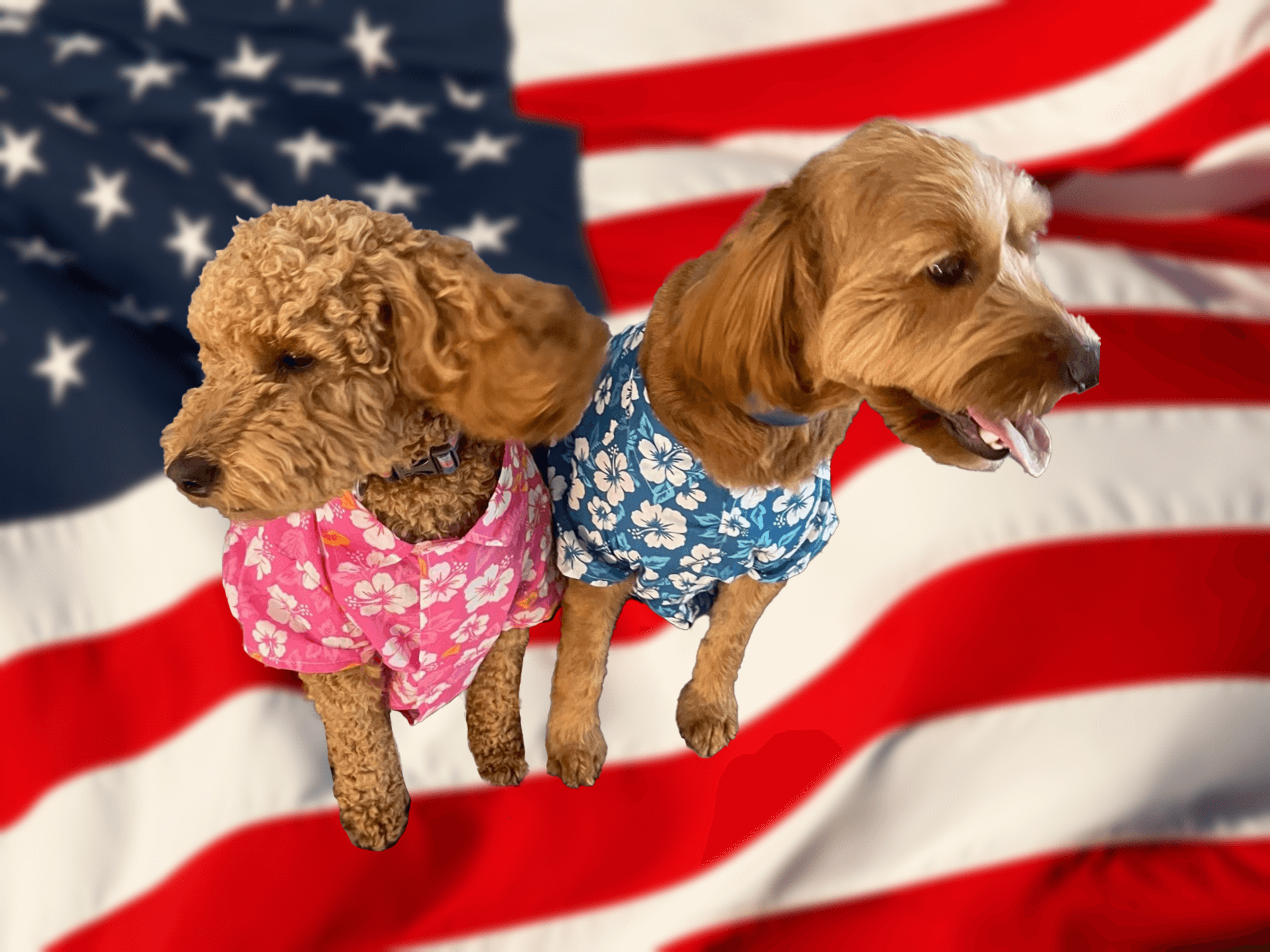
SPECIAL NOTE: This article was inspired by Nate’s dogs. The real Dolly (left) and Ronnie (right) are pictured below.*
Dolly and Ronnie are good dogs.
* No animals were harmed in the formation of this hypothetical.
Related Attorneys
