
FMJ’s Aviation Team has put together a three-part series on how to avoid some of the less understood state and federal tax pitfalls that come with buying, operating, and financing business aircraft and commercial aviation assets.
Part 2: DON’T TREAD STAMP ON ME
The infamous Boston Tea Party occurred on December 16, 1773, when colonists dumped more than 300 chests of tea that was taxed under the Townshend Act overboard from the Dartmouth, Eleanorc, and Beaver, three full-rigged ships that were docked in Boston Harbor. Overcome with independent fervor and armed with slogans such as, “no taxation without representation,” and “don’t tread on me,” open rebellion to taxes would lead the Americans to declare their independence from Britain less than two years later. However, the tea tax was just the tipping point. Trouble had been brewing for years.
Stamp taxes are believed to have originated in Venice in the early 17th century, migrating their way across Europe with France, Denmark, and Prussia adopting them, and finally England in 1694. More than 70 years later, the British Parliament passed An Act for Granting and Applying Certain Stamp Duties in the British Colonies and Plantations in America, “The Stamp Act of 1765” or the “Stamp Act.” Parliament had been imposing stamp taxes (or impressed duties) since 1694, but this was the first direct tax of the colonists. Parliament justified it as a tax to help pay for the stationing of British troops on colonist soil following the French and Indian War, a single theatre of the global Seven Years’ War. The colonists did not see a physical French threat. Instead, they saw the threat to their livelihood as the British government endorsed the monopolistic behavior of the East India Company and taxes, especially those that seemed to singularize the colonists, their economy, and global trade.
American colonists were so repulsed by the British imposition of the Stamp Act and other taxes without giving the colonists a say that they called for the first session of the Continental Congress to discuss. (It is a little-known fact that the Continental Congress was originally called the Stamp Act Congress.) At the Continental Congress, Samuel Adams and others drove the discussions that would eventually culminate in the Revolutionary War, and the colonists voted for a boycott of British goods, which led to a repeal of the Stamp Act a year later.
So, What Does Sam Adams Have to do With Aviation and You?
Stamp taxes have largely disappeared in the modern world. At least that is what you might have assumed. However, 249 years after the Boston Tea Party, taxes are still very much with us, both at the federal government level and in all fifty states. Even the seemingly antiquated tax on officially recorded documents still lives on in the United States, where vestiges of the “stamp” concept remain. See, for example, the little stamps adorning cigarette packs, or the transfer tax that is assessed at closing on real estate purchases. While not as ubiquitous as they once were in the consumer world, stamp taxes continue to exist in other forms, such as the ATF stamp for NFA firearms, migratory bird stamps for any hunters looking to hunt waterfowl, or filing fees for many other recordable instruments. More than 40 states have stamp taxes of various sorts, called deed taxes, conveyance taxes, documentary taxes, mansion taxes, and many others. And sometimes they apply to aircraft transfers and financing.
One such frequently overlooked tax is Florida’s documentary stamp tax, which frequently surprises those in the aviation world, whether one of the hundreds of commercial aviation businesses in the state or those that happen to close aircraft transactions there.
A Closer Look – Florida’s Documentary Stamp Tax
The Florida Documentary Stamp Tax is found in Chapter 201, Section 08 of the Florida Statutes (2011) ((available at flsenate.gov)). It generally imposes a tax on “promissory notes, nonnegotiable notes, written obligations to pay money, or assignments of salaries, wages, or other compensation made, executed, delivered, sold, transferred, or assigned in the state, and for each renewal of the same” at a rate of “35 cents on each $100 or fraction thereof of the indebtedness or obligation evidenced thereby . . . but that [t]he tax on any document described in this paragraph may not exceed $2,450.”
While this tax apparently applies to financings, whether aviation related or otherwise, the scope has sometimes been interpreted to be broader, including leases. According to the Florida Treasury Regulations, however, “A lease of tangible personal property which does not contain an unconditional obligation to pay money is not subject to tax, unless the lease provides that the lessee will become the unconditional owner of the property when the total of the rental payments equals the value of the property being leased.” Reg. 12B-4.054(8). Thus, whether a lease is subject to the tax depends on whether the payment obligation is “unconditional.” What constitutes unconditional has been subject to some conflicting authority.
Under a Florida Attorney General Opinion dated December 22, 1997 (AGO 86-31), three described finance leases were stated to be included in the opinion of unconditional obligations and subject to the Florida documentary stamp tax. However, in 2004, the Florida Court of Appeals ruled that an equipment lease was not subject to the documentary stamp tax because it represented a conditional debt. Fl. Dept. Rev. v. Winn Dixie Stores, 884 So.2d 1100 (2004). The subject lease contained language that made clear the lease was a net lease, included a certificate of absolute acceptance of the equipment, and that the right of lessor to be paid rent was “absolute and unconditional.” Notwithstanding, the Court ruled that the lease did not represent an unconditional obligation to pay because there were two inherent conditions to the payment: Lessor’s delivery of equipment, and Lessor allowing Lessee to quietly enjoy throughout the lease term. Thus, it was a true lease and not akin to a note or other absolute obligation to pay (i.e. a sham lease). The court focused heavily on the Department of Revenue’s own regulations, which described unconditional obligations as documents resembling notes and not traditional leases.
There is conflicting information in the AGO and the Winn Dixie case with regard to the Florida documentary stamp tax act and when it applies. Let’s take a couple of examples:
A Michigan businessman decides to upgrade the company Citation after his broker finds a Gulfstream G550 for a steal. He signs the LOI and puts down the deposit without contacting his attorney and runs off to Fort Lauderdale Executive Airport (FXE) to see the aircraft for a visual inspection. Things fall together quickly and he is very pleased with himself as he signs the financing documents provided by his local Michigan bank, his purchase agreement and the aircraft acceptance “all on the plane on the tarmac” in Florida. He then immediately flies the aircraft to Michigan, as he is planning on utilizing the Florida sales tax exemption by removing the aircraft from Florida within ten days of purchase.
- Query: Does he need to pay the Florida Stamp Tax?
- Answer: Probably, yes. Assuming those financing documents he executed on Florida soil included the equivalent of a promissory note among them, absolutely. Bonus Points if you also identified that Florida sales tax may apply on the purchase if the parties fail to file the necessary paperwork with the Florida Department of Revenue to document the fly-away exemption. You might be a paranoid lawyer if you also wanted to scream at the businessman that he should have a pre-buy inspection before accepting delivery because you realized that the sale is probably as-is, where-is without recourse on condition after the purchase.
A Caribbean charter operator recently managed to buy ten SAAB 340 aircraft with run-out engines. The CFO meets with a Miami engine shop where she negotiates a master lease agreement to lease 20 General Electric CT7-9B engines, taking delivery over the next six months.
- Query: Does the air operator need to pay the Florida Stamp Tax on the master lease agreement?
- Answer: Perhaps, if the document constituted a financing lease and firmly accepted delivery of the engines by its terms. But more likely, the master lease agreement probably required the operator to inspect and take delivery of each engine separately, signing final financing lease documents for each engine. If that is the case, the Florida stamp tax might not be capped at $2,450 on initial execution, but at $2,450 for each of the 20 deliveries, depending on how they are documented.
Ultimately, the applicability of the Florida stamp tax can be wide ranging, and it is very dependent on the facts of each transaction.
Final Thoughts
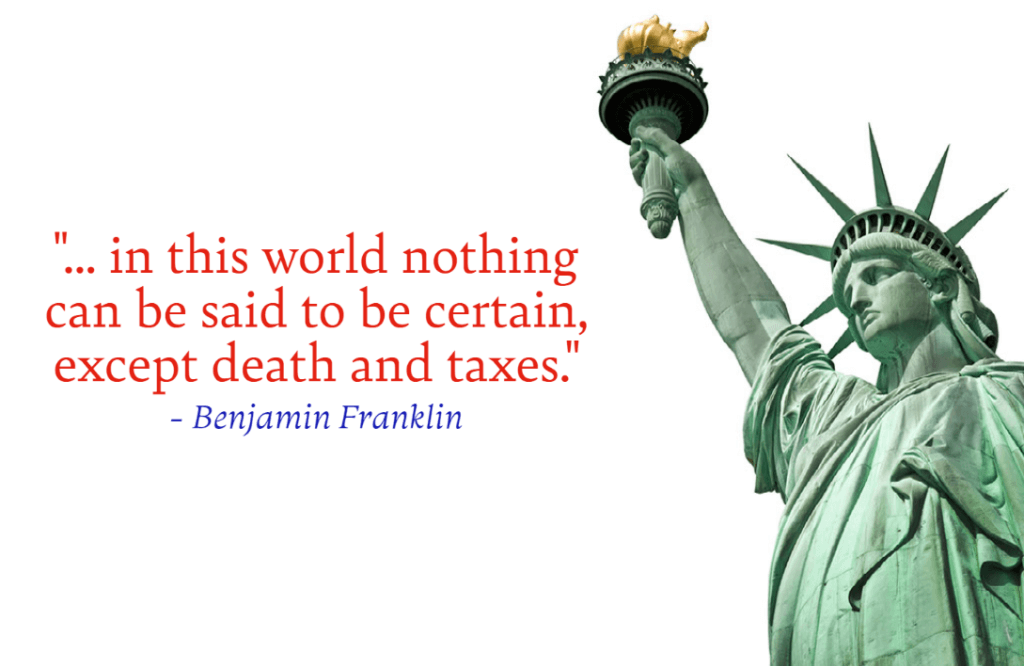
Is there a lesson here in the Florida Stamp Act? Perhaps it is this: notwithstanding our outraged ancestors dumping tea overboard in protest, taxes are always with us and more complex today than ever in history.
When considering the tax implications of an aircraft acquisition or financing, the highly mobile nature of the asset and the global marketplace in which it is showcased can lead to exposure to different, and sometimes arguably antiquated, tax regimes that are lesser known than the more common sales and use or value added taxes. And your analysis may need to extend to multiple states if your transaction or use of the asset has a nexus in more than one jurisdiction. That is where a seasoned aviation attorney can help you evaluate the risks and exposures and plan for means to minimize them.
If you have any questions related to aviation taxes, deductions, or any other aviation-related topics, please contact:
Kevin Johnson at kevin.johnson@fmjlaw.com
Related Attorneys
